 (Image source: Gemini)
 The way we think about seeing the world has fundamentally shifted. We've moved past the era of greenwashing, where a hotel simply asks you to reuse your towel to save the planet. Today, the conversation is about regenerative travel. This means you aren't just trying to do less harm. You're actually trying to leave a place better than you found it. So what does this actually mean for your next trip? It means choosing destinations that use your tourist dollars to fund reforestation, protect endangered species, and keep local cultures growing. When you pick the right spot, your plane ticket becomes a direct investment in global conservation efforts.
Costa Rica as the Gold Standard of Biodiversity
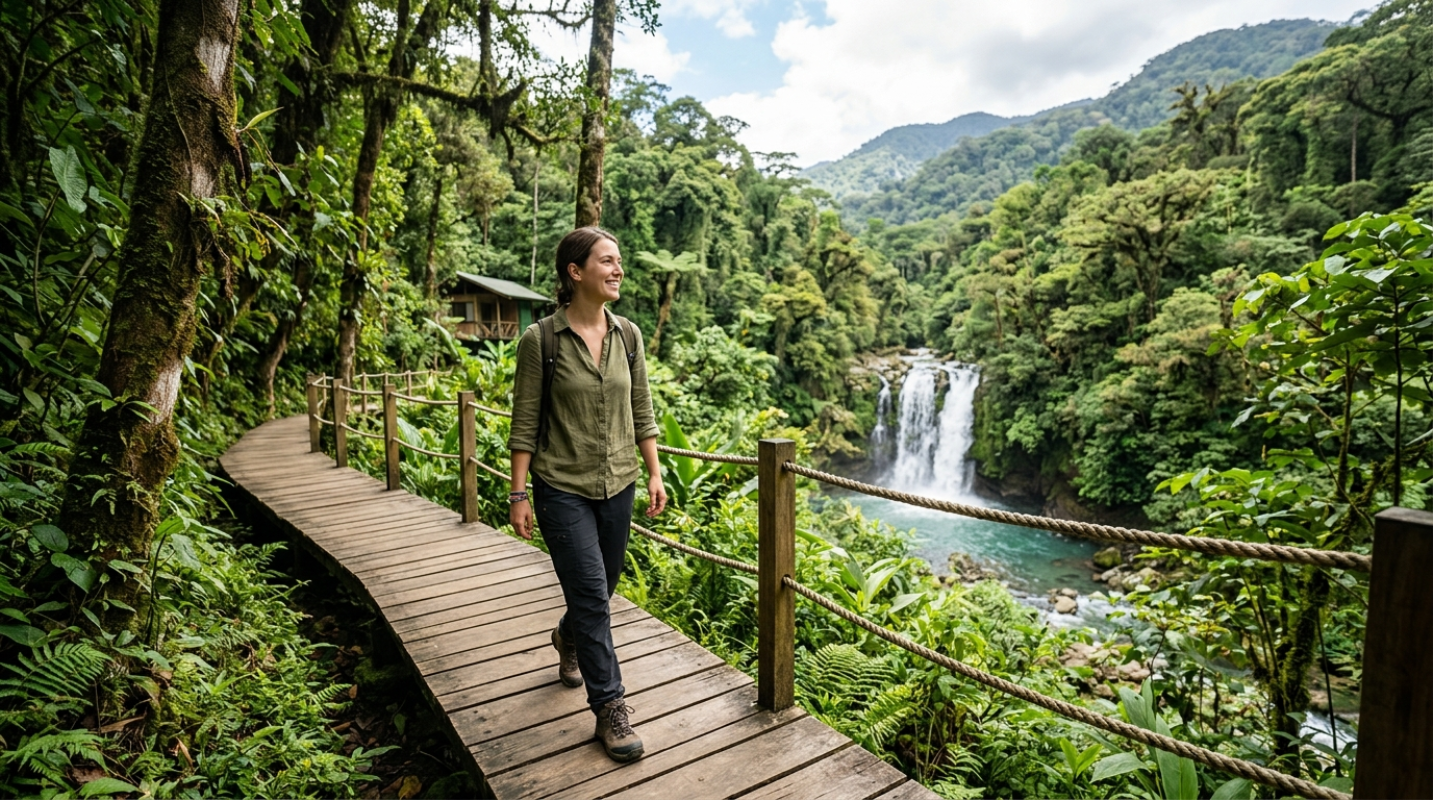
If there's a poster child for doing things right, it's Costa Rica. It's the first tropical country in the world to actually reverse deforestation. Think about that for a second. Although much of the world is losing green space, Costa Rica has managed to bring it back. Today, about 60 percent of the country is covered in forest, and a full quarter of its land is legally protected.
When you visit, you'll see this isn't just for show. The country generates a staggering 99 percent of its electricity from renewable sources. Whether you're staying in a community-led eco-lodge in the Osa Peninsula or hiking through the cloud forests of Monteverde, you're part of a system that works. In 2024, tourism brought in over 5.4 billion dollars to their economy. That money doesn't just disappear into corporate pockets. It supports over half a million jobs, meaning nearly 25 percent of the working population is linked to tourism.
Supporting these community-led lodges is the best way to make sure your money stays local. These spots often use solar power, harvest rainwater, and employ local guides who know the land better than any GPS. It's a model where the environment and the economy aren't fighting. They're on the same team.
The Azores and a Model for Sustainable Island Tourism
If you haven't put this Portuguese archipelago on your radar yet, you're missing out on a masterclass in marine conservation. Located in the middle of the Atlantic, the Azores have transformed from a whaling hub into one of the world's premier whale-watching destinations. It's a beautiful example of an economy changing to protect its greatest assets.
In late 2024, the region made a massive move by establishing the largest marine protected area network in the North Atlantic.² It covers 287,000 square kilometers, which is about 30 percent of the waters surrounding the islands.³ Half of that area is fully protected, meaning no fishing or extraction is allowed at all. This isn't just about saving fish. It's about preserving a "Hope Spot" that keeps the entire ocean's ecosystem healthy.²
What makes the Azores special is how tourism blends with local agriculture. You'll find yourself eating cheese and wine produced just a few miles from your hotel. This teamwork keeps the carbon footprint low and the local culture high. Plus, the whale watching ethics here are some of the strictest on earth. You won't find boats crowding the animals. Instead, you'll find a deep respect for the 28 species of whales and dolphins that call these waters home.
Bhutan and High Value Low Impact Travel
Bhutan is a place that does things differently. Instead of chasing as many tourists as possible, they've stuck to a "High Value, Low Volume" policy. They prioritize Gross National Happiness over the typical bottom line. For a traveler, this means you have to pay a Sustainable Development Fee, which was recently set at 100 dollars per night through 2027.
Does that sound steep? Maybe. But consider where that money goes. It directly funds free healthcare, education, and infrastructure for the Bhutanese people. It also make sures the country remains carbon negative. Yes, you read that right. Bhutan absorbs more CO2 than it emits, thanks to a constitutional mandate that at least 60 percent of the country must remain forested.
When you walk through the pristine spaces or visit ancient monasteries, you don't feel like you're in a crowded theme park. You feel like a guest in a kingdom that truly values its heritage. It's a reminder that travel is a privilege, and paying a bit more to make sure a destination stays pristine is a fair trade.
Practical Tips for the Aware Traveler
You don't have to go to a remote island to be a sustainable traveler. Much of the impact comes from the small choices you make every day. It starts with where you put your head at night. Look for accommodations with credible certifications like the Global Sustainable Tourism Council (GSTC) or EarthCheck. In cities like Helsinki, nearly 99 percent of hotel rooms in larger establishments are environmentally certified.¹
Here are a few ways you can lighten your load
- Pack light and plastic-free. Every pound on a plane equals more fuel. Bring a high-quality water filter bottle to avoid buying plastic.
- Eat local and seasonal. Avoid imported foods that have traveled thousands of miles to get to your plate. If it’s not in season, don’t order it.
- Use public transit or bikes. Helsinki is currently the global leader in sustainable tourism because of its incredible infrastructure.¹ Over 50 percent of the city’s energy is renewable, and its public transit makes cars unnecessary.
- Engage with the local economy. Buy your souvenirs from local artisans, not airport gift shops. Ask your guide for a recommendation for a family-owned restaurant.
Managing your carbon footprint is about more than just buying offsets. It's about reducing what you use in the first place. Think of it like a digital detox for your environmental impact. It feels better to consume less.
An Ambassador for the Planet
At the end of the day, the future of global conservation depends on the choices we make as individuals. We are moving toward a world where "leave no trace" is the bare minimum. The goal now is to leave a positive "handprint." Did your visit help fund a new school? Did it help protect a coral reef? Did it provide a living wage for a local family?
The 2024 GDS-Index results showed that forward-thinking governance and transparency are the keys to a better travel industry.¹ But those governments only act when they see that travelers value sustainability. When you choose a destination like Palau, where you have to sign a mandatory environmental pledge in your passport, you're sending a message.⁴ You're saying that you care about the maritime territory as much as the locals do.
Becoming an ambassador for the planet means sharing these stories. Tell your friends about the community-led safari in Kenya that gives 10 percent of its earnings back to local water projects. Talk about the carbon-negative forests of Bhutan. Your travel choices are a vote for the kind of world you want to live in. So, where are you going to cast your vote next?